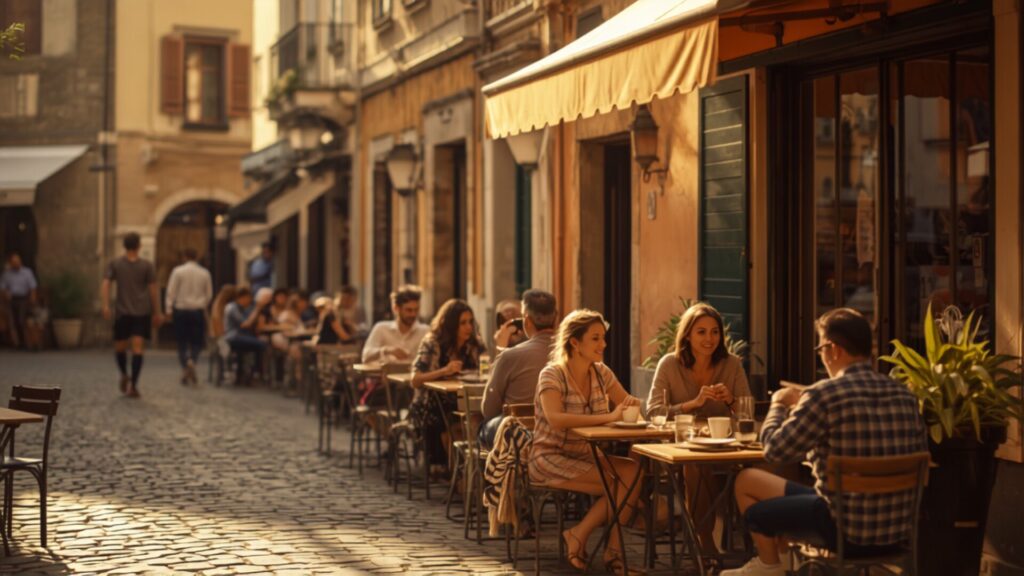
I was sitting in a beautiful plaza in a small Spanish village, the kind of place where the tables spill onto cobblestones and most of the people seem to know one another. My girls were beside me eating ice cream, although judging by their faces and clothes, very little of it had actually made it into their mouths.
As we watched the world go by, I noticed something strange happening at the restaurant next to us. People were talking to each other! Not talking while checking their phones, not taking photos of their food or disappearing into a quick scroll between sentences, just sitting there looking at one another, having actual conversations, sometimes sitting in silence without the need to look at their phones.
Surely this was an exception, I thought, so I looked across at another restaurant. Same thing. Over the next few weeks, as we travelled through Spain and France, I kept noticing it everywhere. Couples lingered over coffee long after it had gone cold. Families sat around tables well after the plates had been cleared. Friends argued, laughed and generally paid actual attention to one another.
This isn’t some technologically untouched utopia. But compared with Australia, where I spend most of my time, there was noticeably less urgency to fill every spare moment with a screen.
I started experimenting. I began leaving my phone behind when I went for coffee, and the first few times felt genuinely uncomfortable, almost naked. What was I supposed to do while I waited? Didn’t I need to read something, write something, reply to something, or at least waste a bit of time on social media while pretending not to? Turns out I didn’t. Without my phone, I started noticing more: the sound of spoons in coffee cups, kids chasing pigeons, old men sitting together as if they had absolutely nowhere else to be. My mind began to wander, and then it began to wonder. My thoughts stretched out instead of jumping from one tiny digital hit to the next, my body and mind relaxed, and time stopped feeling like something I had to outrun.
At first I put it down to summer holidays, everyone relaxed, long days, nothing urgent. But there was something deeper going on. In the parts of Spain and France we visited, mealtimes felt genuinely protected. The food arrived slowly. The waiter wasn’t hovering, desperate to clear you out for a second sitting, because there wasn’t one. Meals felt less like refuelling stops and more like social rituals.
Growing up in Switzerland, I always had to be home for dinner. It was considered rude to miss it, and nobody left the table until the last person had finished eating, which as a kid could feel like a small daily prison sentence. I get it now. My parents weren’t just enforcing a rule about being on time. They were protecting the table as a place where you connected with each other.
Technology has become incredibly good at helping us communicate. I’m not convinced it’s become equally good at helping us connect. Phones spread fastest into the spaces where a culture has stopped fiercely protecting attention, and a meal can quietly become background scenery unless everyone at the table agrees that being together is actually the main event.
Here are a few suggestions for your own home:
- Guard mealtimes as deliberately as you guard your sleep. Both are daily opportunities to decompress, and both get sacrificed first when life gets busy.
- Eat together whenever you can. I try to sit down with my family most nights, even when it’s chaos and somebody suddenly decides that their favourite meal is now their least favourite one.
- Keep screens away from the table, no phones, no TV, no exceptions. Attention is one of the clearest ways you can show someone they matter.
- Let the meal linger. Stay ten minutes longer, ask questions, play something. I’m not a huge board game person myself, which is partly why we built Wondercards, to give families a way into deeper conversation. The art of communication is a skill, and kids learn it by being included in real ones, not by being handed a screen to keep them quiet until the adults are done.
Sometimes being fully alive is as simple as sitting down, leaving your phone in your pocket and paying wholehearted attention to the people right in front of you.
I wonder what would happen if, for one meal a day, you left your phone in another room.